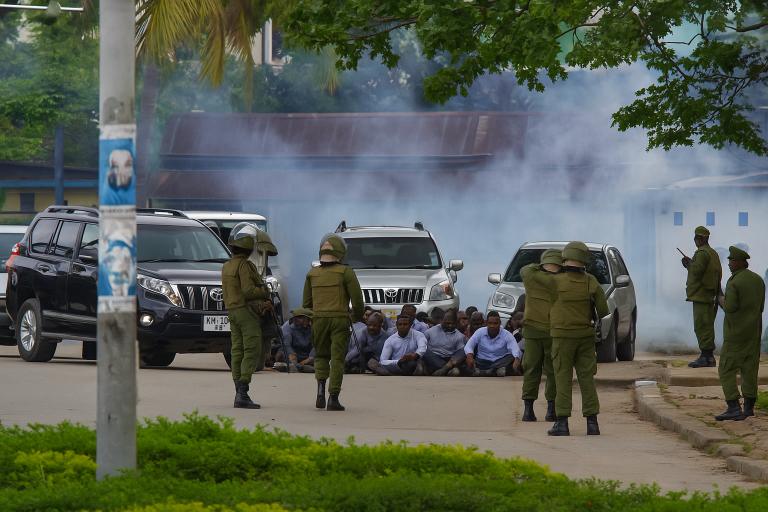
Tanzania faces a growing political crisis as over 300 citizens are now facing treason charges in the aftermath of last month’s contested general elections.
Those arrested include a wide cross-section of society, from political figures and entrepreneurs to social media personalities and even minors, some as young as thirteen years old.
The detentions have taken place across seven towns, with the largest clusters reported in Dar es Salaam and Iringa.
Court documents show that nearly 340 people were initially detained for their alleged involvement in protests and unrest surrounding the October 29 elections. Of these, 302 individuals have been formally charged with treason, one of the gravest crimes under Tanzanian law, which can carry the death penalty.
According to legal definitions, treason involves acts such as attempting to harm the president or waging war against the state, whether performed domestically or abroad.
Among those in court are well-known online influencers, including Jenifer Jovin, popularly called Niffer, accused of advising protesters to purchase gas masks to shield themselves from tear gas.
Others facing treason charges include Mika Chavala, Ms_Walterss, Ruthmelda Silaa—also known as strong_income—and detha_obven. To assist the accused, the Tanganyika Law Society has offered free legal representation.
At the same time, Chadema, Tanzania’s main opposition party, has firmly denied reports of engaging in any discussions with President Samia Suluhu’s government.
John Heche, the party’s deputy leader, who was among those briefly detained, stressed that the struggle for justice and democratic rights continues. He said, “Kama tulivyokamatwa ndivyo tulivyoachiliwa, hakuna mazungumzo tuliyofanywa na mtu yeyote, hatuna makubaliano tulioachiliwa nayo, bado tunaamini sisi ni watu innocent, na tunataka watu wote walioshikwa kinyume na utaratibu waachiwe waende kwa familia zao.”
These legal proceedings follow protests and clashes in several regions during and after the elections, as the state expands its crackdown from public demonstrations to formal court actions.
Human rights observers, including UN human rights chief Volker Türk, have called for investigations into killings and disappearances reported in the post-election period, amid allegations that bodies were moved to undisclosed locations.
Meanwhile, the 13th Parliament of Tanzania convened its first sitting in Dodoma, carrying out key proceedings such as reading the presidential proclamation summoning parliament, electing Mussa Azzan Zungu as the speaker, swearing in members of parliament, confirming the prime minister, and electing the deputy speaker.
The combination of parliamentary activities and the surge in treason charges underscores the tense political climate gripping the country.































Comments
Sign in with Google to comment, reply, and like comments.
Continue with Google